

HDPE pipes in Kenya: sizes, prices, uses and how to buy
A complete 2026 guide to HDPE pipes in Kenya — sizes from 20mm to 110mm, PN pressure ratings, prices, uses for boreholes, irrigation and water supply, and how to buy quality HDPE pipes from Wasser Pipes.
Wasser Pipes8 min read
Quick answer
HDPE (High-Density Polyethylene) pipes are strong, flexible, corrosion-free plastic pipes used across Kenya for water supply, boreholes, drip and sprinkler irrigation, and gas distribution. Wasser HDPE pipes come in sizes from 20mm to 110mm, in pressure classes from PN6 to PN20, supplied in long 50m–100m coils with leak-free heat-fused joints and a service life of 50 years or more.
What are HDPE pipes?
HDPE stands for High-Density Polyethylene — a tough, lightweight thermoplastic that has become one of the world's most widely used piping materials since polyethylene was first discovered in 1933. Modern HDPE (also written as PE, in grades such as PE80 and PE100) is highly engineered for demanding jobs: pressure-rated gas, drinking-water and sanitary systems, recycled-water lines and sustainable energy projects.
In simple terms, an HDPE pipe is the black — often stripe-marked — plastic pipe you see coiled in long rolls at hardware yards and on construction and farm sites across Kenya. Compared with a low-density pipe of the same pressure rating and diameter, HDPE has a thinner wall and a larger inner bore, so it carries more water for its size while using less raw material.
Why HDPE pipes are a smart choice for Kenya
Kenya's water and construction sector puts pipes through a lot: long distances from rivers, dams and boreholes to storage tanks; rocky and shifting ground; strong equatorial sun on exposed runs; and the need to keep clean water clean.
HDPE handles all of it. It doesn't rust, corrode or scale, its heat-fused joints don't leak, and it flexes around bends and uneven terrain instead of cracking. For homeowners, farmers, contractors, water utilities and NGOs alike, that means fewer leaks, lower maintenance and a system that keeps working for decades.
Common uses of HDPE pipes in Kenya
Because HDPE is pressure-rated, non-toxic and virtually leak-free, it is used almost everywhere water or gas needs to move. The most common applications across the Kenyan market:
Water supply & mains
Clean, potable-water distribution from source to tanks, homes, estates and institutions.
Boreholes
Rising mains and delivery lines that carry pump pressure from deep boreholes to storage.
Irrigation
Mainlines and sub-mains for drip and sprinkler systems on farms, greenhouses and horticulture.
Community water projects
Long-run supply lines for rural schemes, county water projects and NGO installations.
Gas distribution
Pressure-rated gas lines — HDPE is engineered and colour-marked for gas as well as water.
Industrial & chemical transfer
Moving recycled water, effluent and industrial fluids where corrosion resistance matters.
HDPE pipe sizes, PN ratings and prices in Kenya
Two numbers decide which HDPE pipe you need: the diameter (in millimetres, sometimes quoted in inches) and the PN pressure rating. Wasser HDPE pipes for water and gas are produced from 20mm up to 110mm.
Understanding PN (pressure) ratings
PN means "Pressure Nominal" — the maximum working pressure the pipe can safely handle, in bar, at normal temperature. The higher the PN, the thicker the wall and the higher the pressure it withstands.
| PN class | Max working pressure | Typical Kenyan use |
|---|---|---|
| PN6 | 6 bar | Low-pressure gravity water & light irrigation |
| PN8 | 8 bar | General irrigation lines |
| PN10 | 10 bar | General water supply & irrigation mains |
| PN12.5 | 12.5 bar | Higher-pressure supply lines |
| PN16 | 16 bar | High-pressure water supply, boreholes, pumped mains |
| PN20 | 20 bar | Industrial, municipal & deep-borehole systems |
Available sizes
Wasser HDPE pipes are available in the following diameters, each offered across the relevant PN classes and supplied in long coils to reduce joints on site:
| Diameter (mm) | Approx. inch size | Common use |
|---|---|---|
| 20mm | ½" | Household connections, drip laterals |
| 25mm | ¾" | Home supply, small irrigation |
| 32mm | 1" | Home & farm sub-mains |
| 40mm | 1¼" | Irrigation sub-mains |
| 50mm | 1½" | Irrigation & small water schemes |
| 63mm | 2" | Borehole & supply mains |
| 75mm | 2½" | Supply mains, medium projects |
| 90mm | 3" | Larger distribution mains |
| 110mm | 4" | Main distribution & municipal lines |
Wasser HDPE pipe specifications
Wasser HDPE pipes are manufactured to high international standards, with raw materials meeting DIN, TSE and ISO requirements. The key technical details:
- Sizes: 20mm to 110mm, for both water and gas
- Pressure ratings: PN6, PN8, PN10, PN12.5, PN16 and PN20
- Maximum working temperature: 65 °C
- Supplied lengths: long coils of 50 metres to 100 metres, reducing the number of joints on site
- Wall design: a thinner wall than low-density pipe for the same pressure — larger bore, better flow, less material
Key advantages of HDPE pipes
Lower construction cost
The installed cost of PE pipe can be significantly less than other pipe materials.
Leak-free fused joints
Heat-fused joints are as strong as — or stronger than — the pipe itself, eliminating leak points.
Light & flexible
Light weight and flexibility allow fast, cost-effective installation methods other materials can't match.
Corrosion-free & durable
No rust, scale or chemical attack — long-term reliability with low maintenance costs.
Long coil lengths
Produced in 50m–100m lengths, so fewer joints, faster laying and lower fitting costs.
Safe for drinking water
Non-toxic and inert — HDPE doesn't add taste or react with the water it carries.
HDPE vs PVC-U vs PP-R: which pipe for which job?
One of the most common questions Kenyan buyers ask is which pipe material to use. The honest answer is that each type is engineered for a different job — and Wasser Pipes supplies all three, so you can match the pipe to the task.
| Pipe type | Best for | Why |
|---|---|---|
| HDPE | Water mains, boreholes, irrigation, gas — especially long buried runs | Flexible, leak-free fusion joints, long coils, high pressure ratings |
| PP-R | Hot & cold water plumbing inside buildings | Handles hot water, hygienic smooth bore, easy to install, long life |
| PVC-U | Soil, waste, rainwater & drainage; some pressure lines | Rigid, corrosion-free, cost-effective for drainage and gravity systems |
In short: use HDPE where you need long, tough, pressurised runs across ground; use PP-R for indoor hot and cold plumbing; and use PVC-U for drainage, soil, waste and rainwater. All three families, with full dimensions and product codes, are on the Wasser product range.
How to choose the right HDPE pipe
Getting the specification right the first time saves money and prevents failures. Work through these four steps:
- Match the pressure (PN) to the system. Gravity and low-pressure lines can use PN6–PN10; pumped mains and boreholes usually need PN16 or PN20. When in doubt, size up.
- Pick the diameter for your flow. Bigger diameter means more flow and less friction loss over distance. For long runs, a slightly larger pipe often pays for itself in pump energy.
- Confirm the grade and standard. Insist on properly rated material (PE80/PE100) manufactured to DIN/ISO standards, so the pipe delivers its full pressure rating and lifespan.
- Plan the jointing. Decide between butt fusion, electrofusion or compression fittings, and order the matching fittings up front.
Our HDPE pipe sizing guide works through each of those steps in detail, with a full size chart and the four mistakes that cost the most money on site.
Keep reading
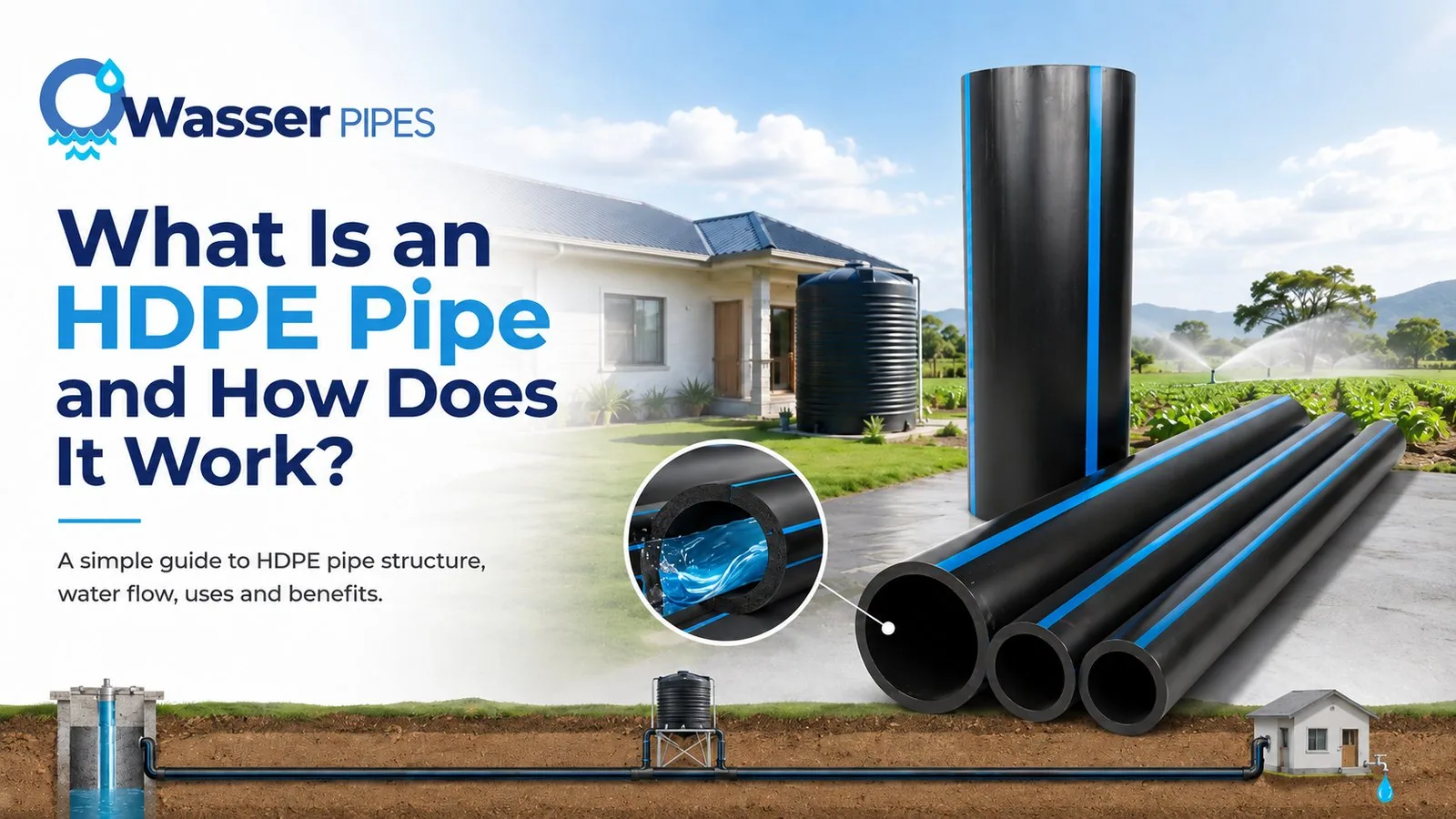 What Is an HDPE Pipe & How Does It Work?The structure, the smooth bore, the fused joints — a plain-English explanation of what makes an HDPE pipe last fifty years.Read the guide
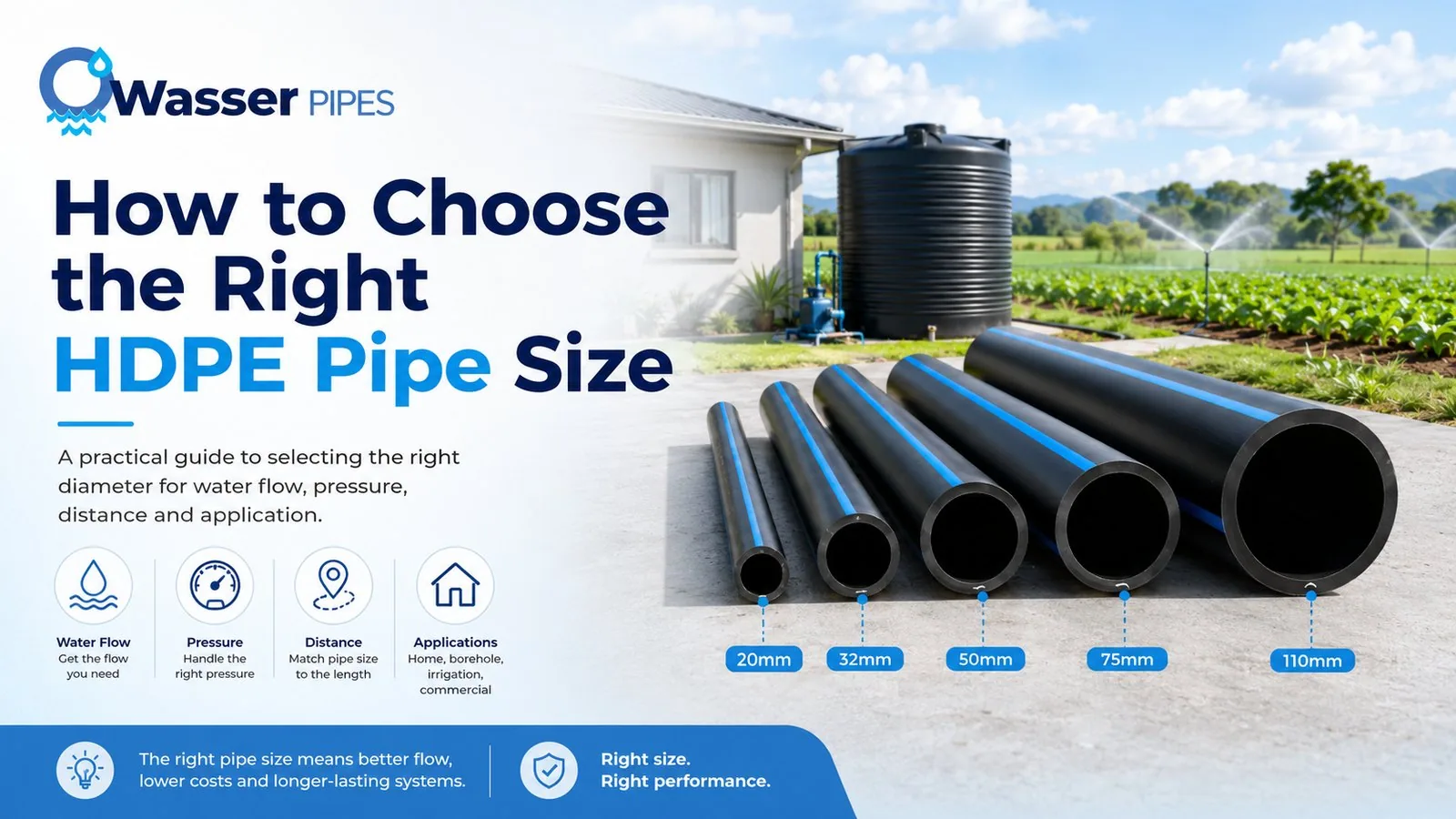 How to Choose the Right HDPE Pipe SizeFlow, pressure, distance and application — the four things that set your diameter and PN class, plus the size chart and the mistakes to avoid.Read the guide
Get quality HDPE pipes from Wasser Pipes
From a single home connection to a full borehole, irrigation or municipal project — we'll help you choose the right size and pressure class, and quote pipes and fittings together.