

What is an HDPE pipe, and how does it actually work?
A simple guide to HDPE pipe structure, water flow, jointing, uses and benefits — and why Wasser HDPE, made to DIN, TSE and ISO standards, is a trusted choice in Kenya.
Wasser Pipes7 min read
Quick answer
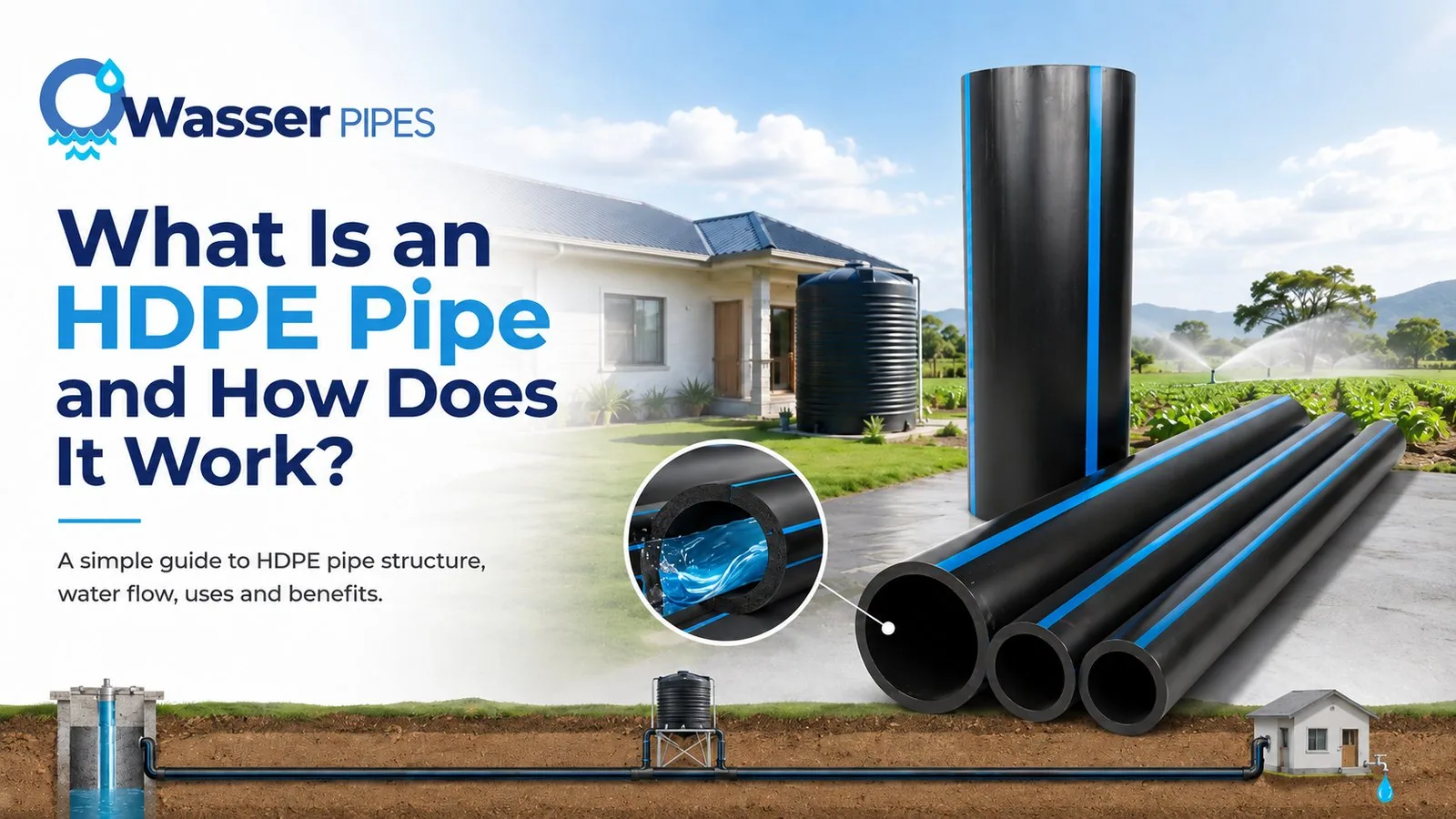
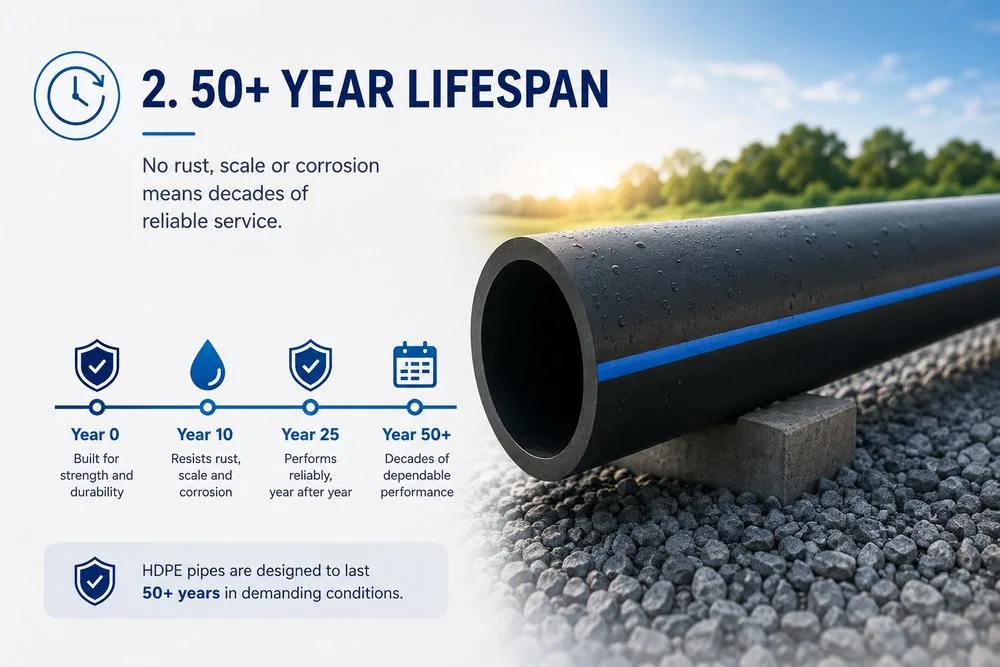
An HDPE pipe is a strong, flexible black plastic pipe made from High-Density Polyethylene. It works by carrying water — or gas — through a smooth internal bore under pressure, with sections joined by heat fusion into one continuous, leak-free line. HDPE doesn't rust, corrode or scale, lasts 50 years or more, and is the first choice for water mains, boreholes and irrigation. In Kenya, Wasser Pipes manufactures HDPE to DIN, TSE and ISO standards, from 20mm to 110mm in PN6–PN20.
What is an HDPE pipe?
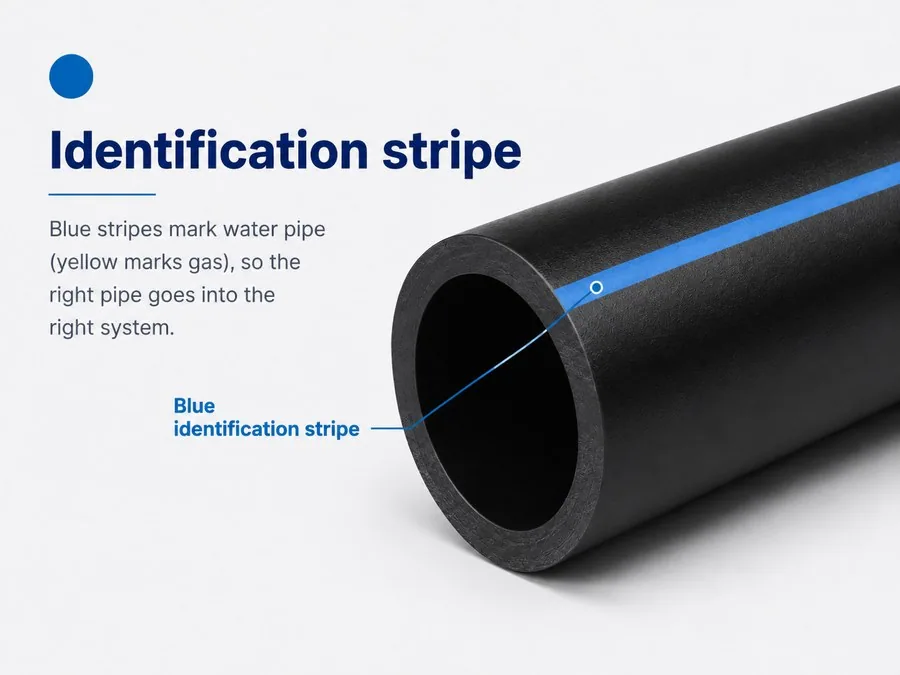
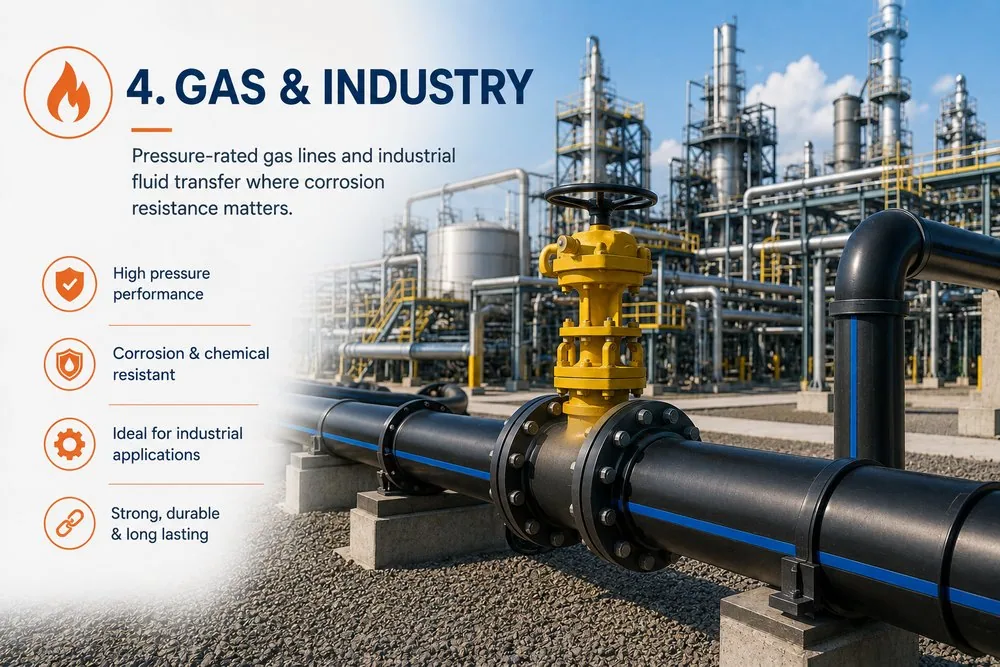
HDPE stands for High-Density Polyethylene — a tough, lightweight thermoplastic that has become one of the most trusted piping materials in the world since polyethylene was discovered in 1933. An HDPE pipe is the black, often blue-striped pipe you see coiled in long rolls on construction and farm sites across Kenya. It is engineered for demanding jobs: pressure-rated water and gas supply, boreholes, irrigation, drinking-water systems and more.
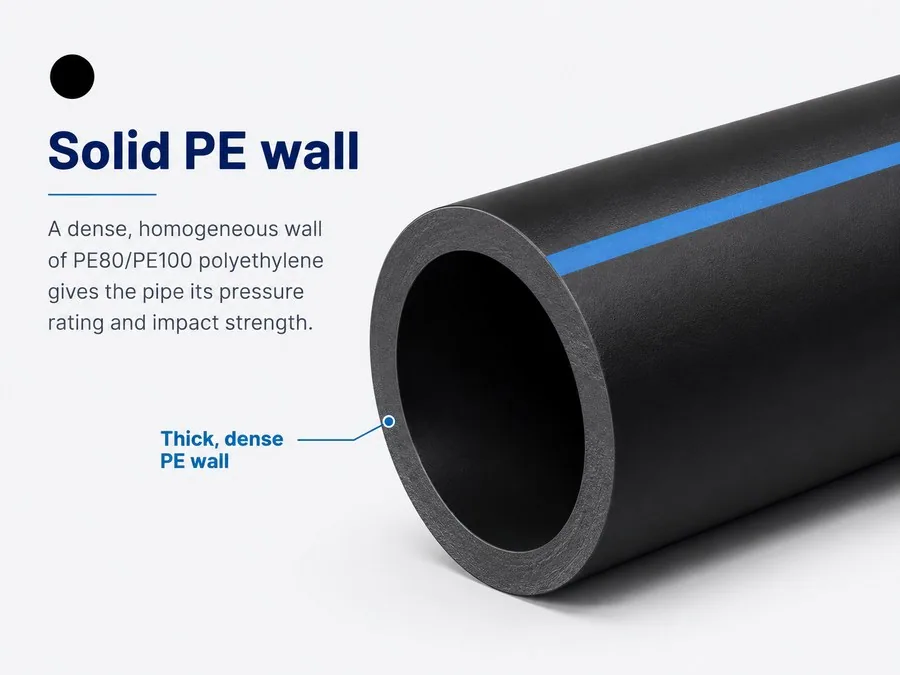
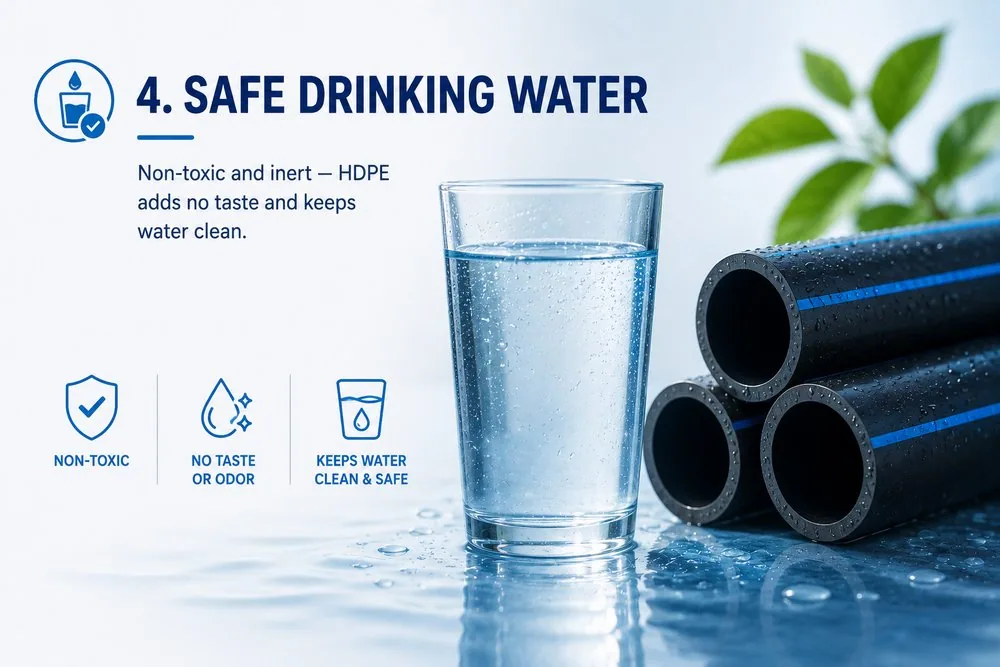
What makes HDPE special is the combination of strength, flexibility and chemical stability. It bends around corners and uneven ground without cracking, shrugs off corrosion and scale, and keeps water clean because it doesn't react with what flows through it. Compared with an older low-density pipe of the same pressure rating and diameter, HDPE has a thinner wall and a larger inner bore, so it carries more water for its size while using less material.
HDPE pipe structure
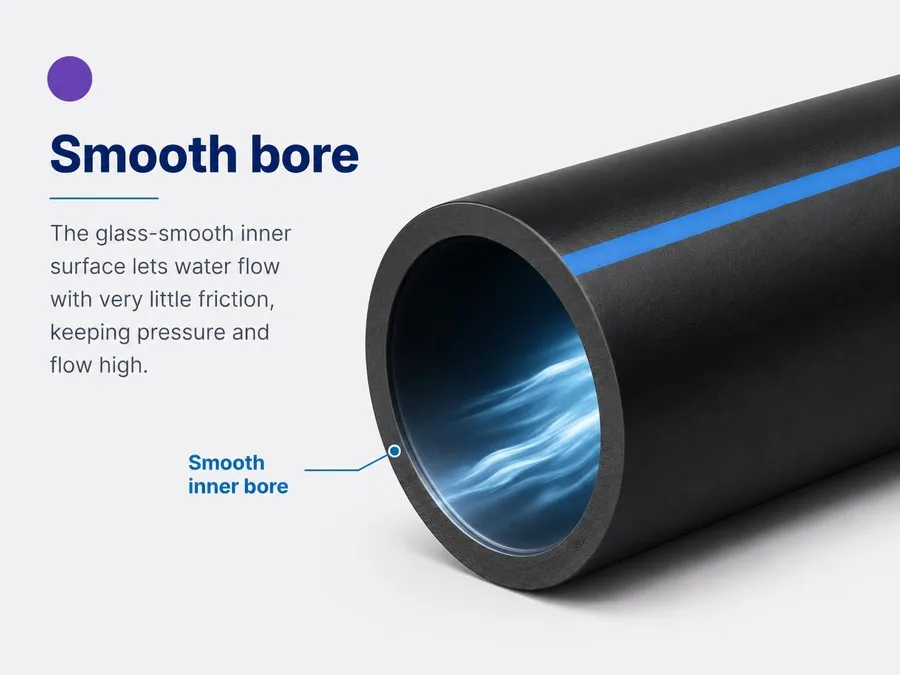
An HDPE pipe looks simple, but every part of it is engineered for performance:
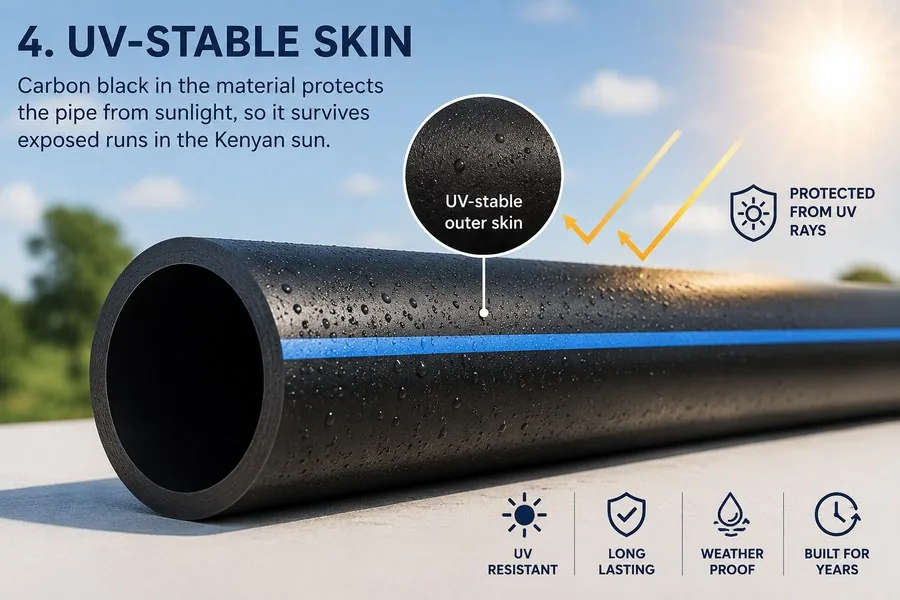
How an HDPE pipe works
An HDPE pipe works as a sealed, pressurised pathway that moves water from a source to where it's needed — from a borehole or tank to a home, or from a mainline out to the crop rows. Step by step:
Water enters under pressure. A pump, gravity from a tank, or the mains pushes water into the pipe.
The smooth bore carries it with minimal friction. HDPE's slippery inner surface means very little pressure is lost along the way, even over long distances.
The pressure rating (PN) holds it safely. The pipe wall is engineered to contain the working pressure — PN6 up to PN20 — without bulging or bursting.
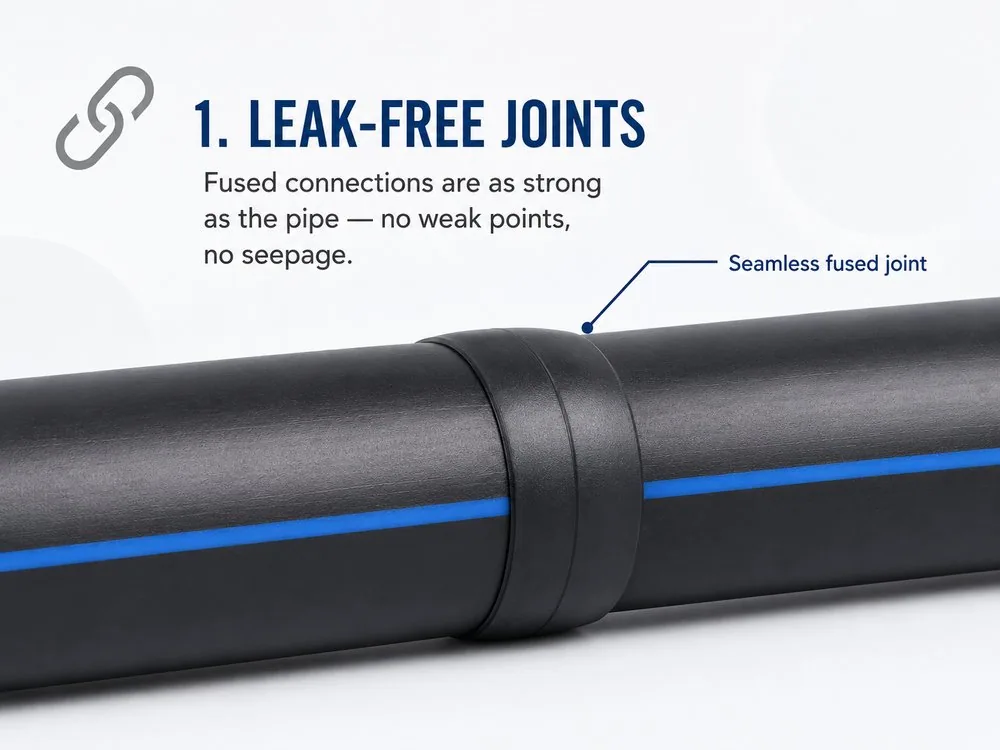
Fused joints keep it leak-free. Because sections are welded into one continuous pipe, there are no weak couplings to leak or pop under pressure.
It flexes with the ground. The pipe bends around obstacles and absorbs ground movement instead of cracking, so the system keeps working for decades.
How HDPE pipes are joined
The secret to HDPE's reliability is its jointing. Instead of glued or threaded couplings that can leak, HDPE is joined by heat fusion — the pipe ends are melted and pressed together to form a single, continuous pipe. A properly fused joint is as strong as, or stronger than, the pipe itself, which eliminates the leak points that plague other systems. For connections to valves, tanks and fittings, mechanical compression fittings and electrofusion are also used.
What HDPE pipes are used for
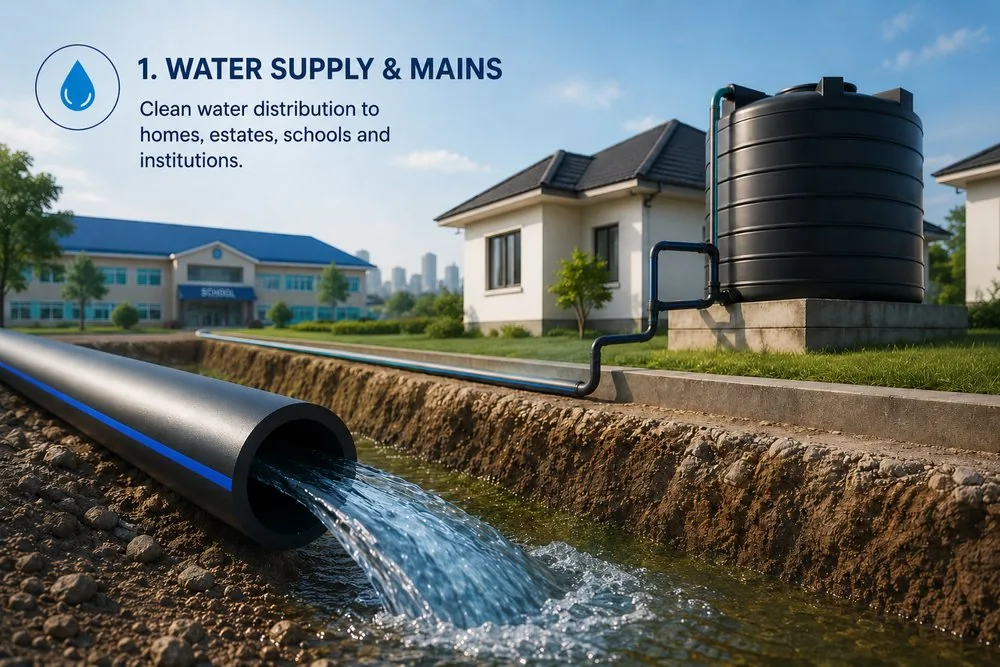
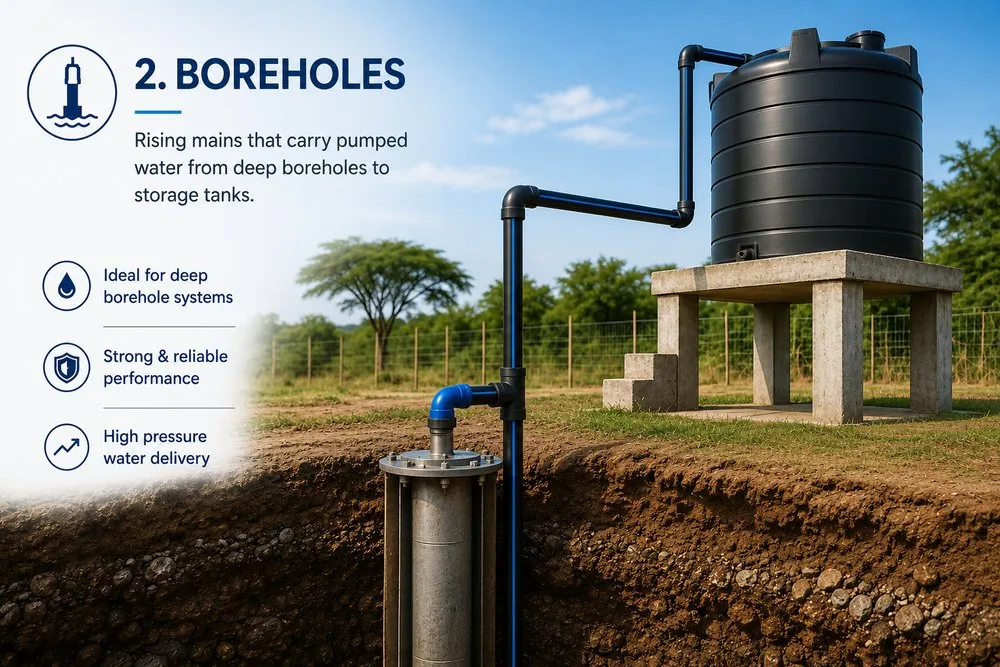
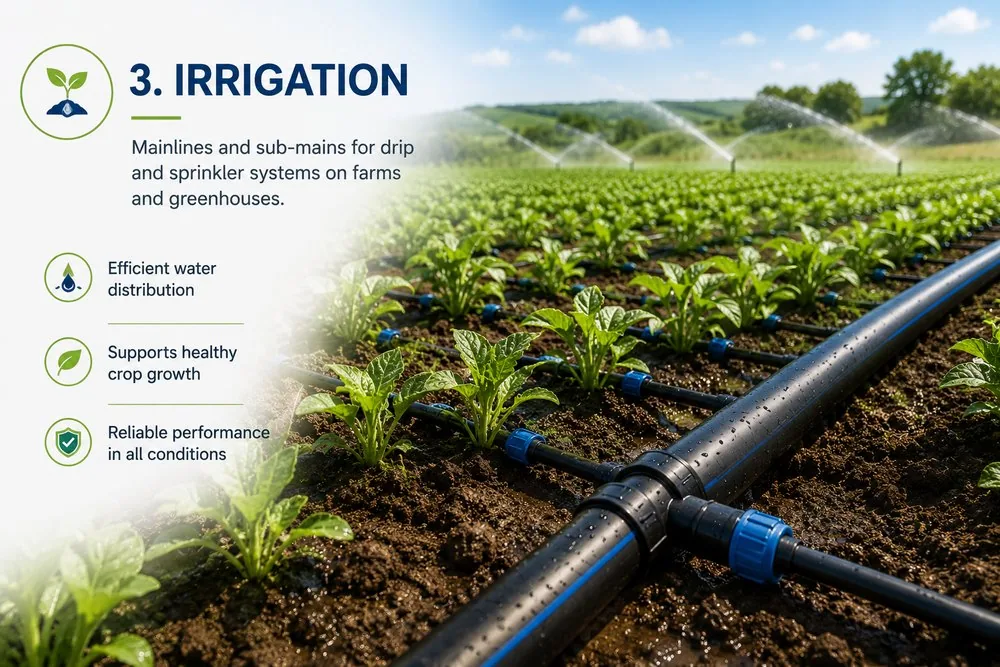
Benefits of HDPE pipe
Why Wasser HDPE pipes are the best choice in Kenya
Not all HDPE is equal — the quality of the raw material and the manufacturing process decide whether a pipe truly delivers its rated pressure and 50-year life. That is where Wasser Pipes, manufactured by Astral Industries Limited, stands apart:
- Manufactured to international standards. Wasser HDPE is produced to DIN, TSE and ISO requirements, so every pipe meets its stated pressure class and quality specification.
- Full pressure range, one supplier. HDPE from 20mm to 110mm in PN6 to PN20 — the right pipe for household connections, boreholes, mains and irrigation, all in one place.
- Genuine, correctly-rated material. Properly formulated PE resin means the wall thickness and pressure rating you pay for is the performance you get — no thin walls, no surprises.
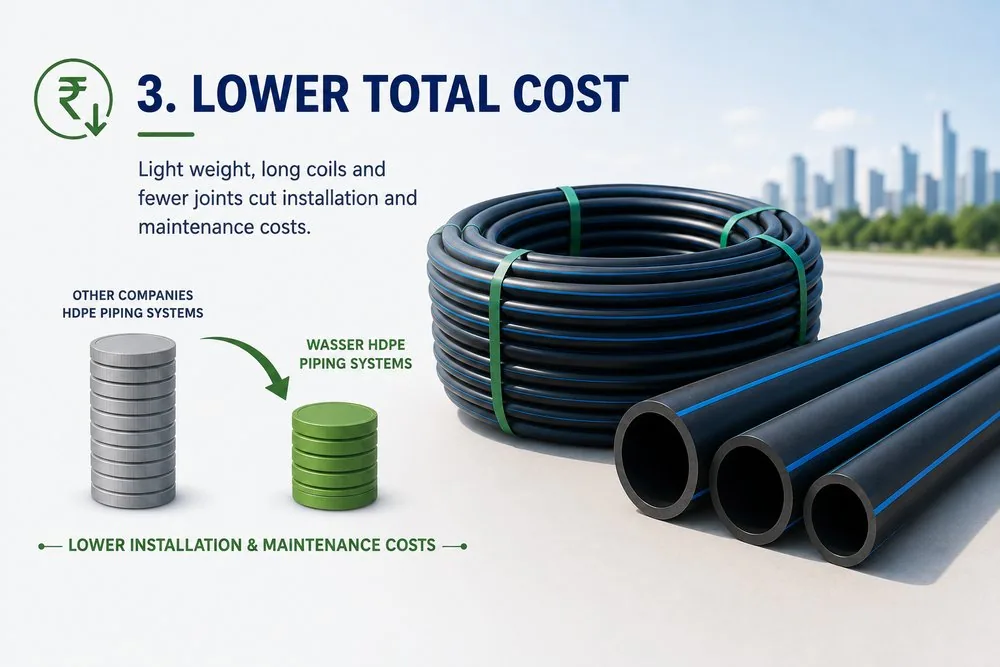
- Long coils, fewer joints. Supplied in 50m–100m lengths to speed installation and reduce potential leak points.
- Local manufacturer, nationwide support. As a Kenyan manufacturer, Wasser backs its pipes with expert advice on sizing, pressure class and fittings — and delivers countrywide.
When your water system has to work for decades, the pipe brand matters. Choose Wasser HDPE — and get a quote today.
Wasser HDPE sizes and pressure ratings
| Property | Range |
|---|---|
| Diameters | 20mm, 25mm, 32mm, 40mm, 50mm, 63mm, 75mm, 90mm, 110mm |
| Pressure ratings | PN6, PN8, PN10, PN12.5, PN16, PN20 |
| Coil lengths | 50m to 100m |
| Max working temperature | 65 °C |
| Standards | DIN, TSE, ISO |
Keep reading
 HDPE Pipes in Kenya (2026): Sizes, Prices, Uses & Buying GuideSizes, PN pressure ratings, prices and applications — everything that decides which HDPE pipe your borehole, farm or water scheme needs.Read the guide
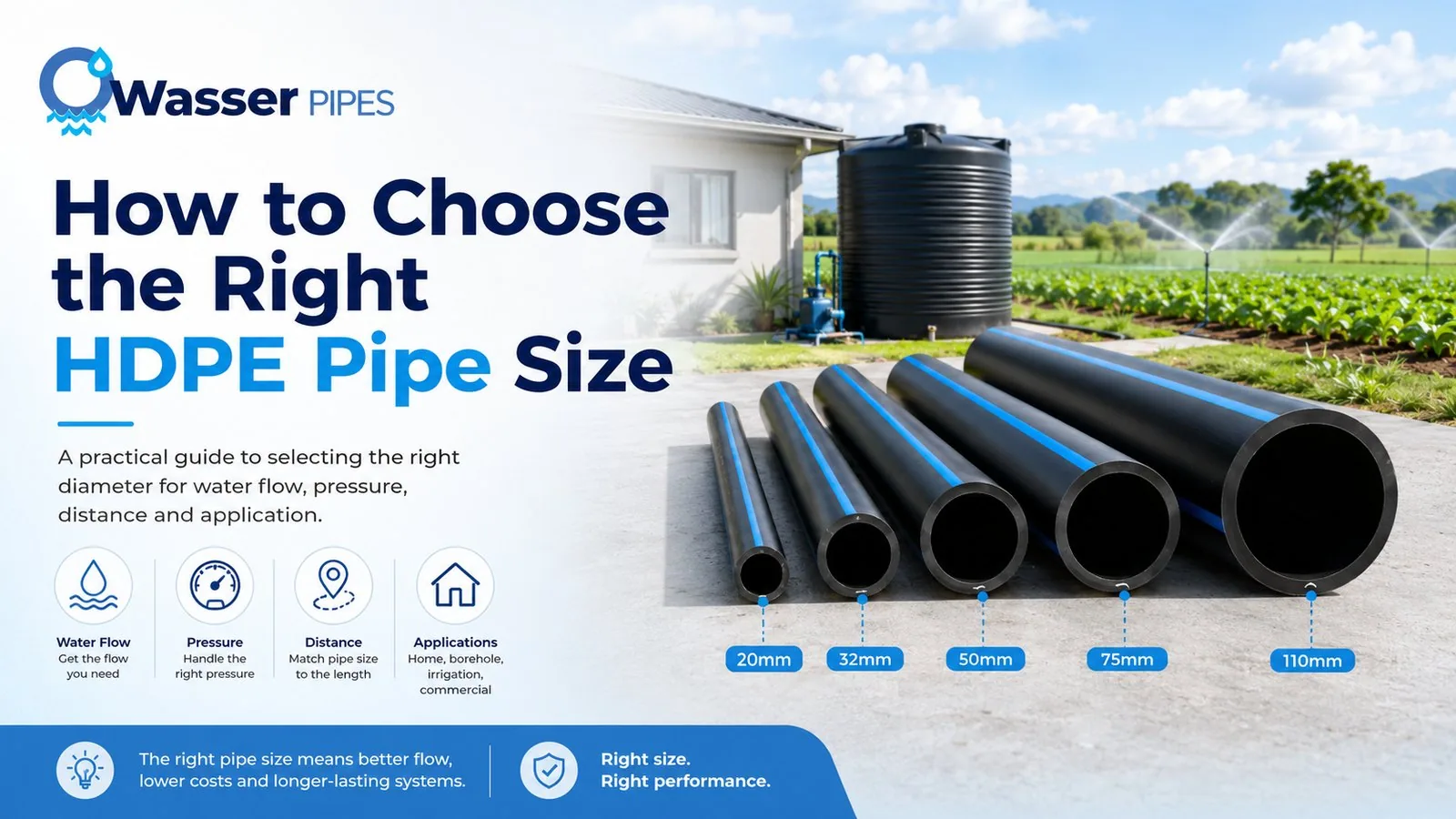 How to Choose the Right HDPE Pipe SizeFlow, pressure, distance and application — the four things that set your diameter and PN class, plus the size chart and the mistakes to avoid.Read the guide
Get genuine Wasser HDPE pipes
From a single home connection to a full borehole or irrigation project — we'll help you choose the right size and pressure class, and quote pipe and fittings together.